











 Reading time 15 minutes
Benefits of translation proxy for the SEO: why it is key to internationalisation
At a time when a digital presence is no longer an option but a necessity for companies in any sector, one question always comes up: How to take a website to other markets (or other languages) without sacrificing quality, brand consistency, or performance SEO?
From my experience, the answer does not lie in complicating the web architecture or taking on lengthy and costly developments. It involves a technology that is not always the most visible, but has become established as the most robust and flexible option for managing truly multilingual websites, both in internationalisation processes and in adaptation to regional languages: the AT-WST translation proxy.
Now, what exactly is a translation proxy applied to SEO international and why its use can make a difference in search results, user experience, and the scalability of the web project?

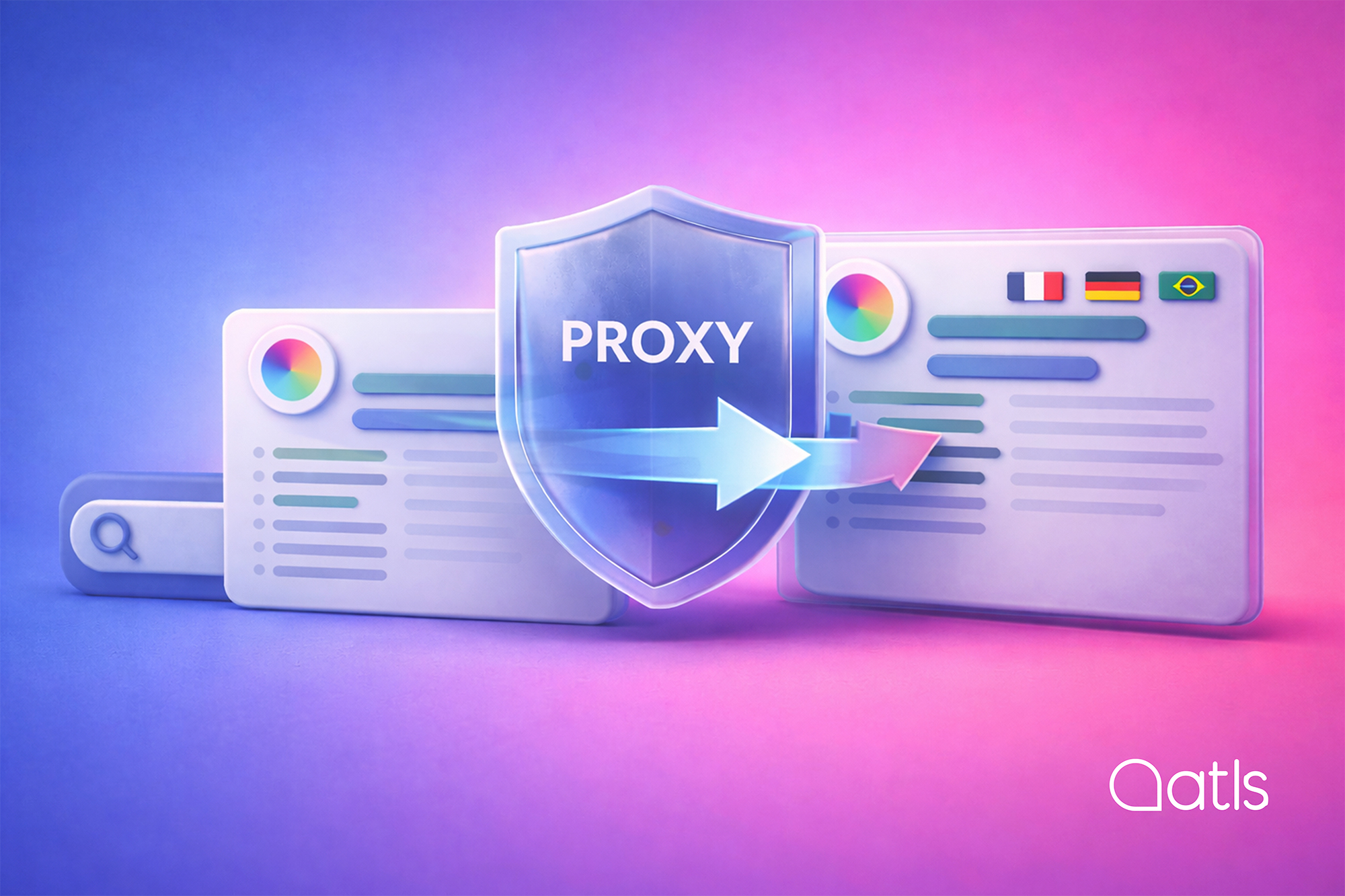
The key is to understand that a translation proxy works as an intermediate layer that translates, adapts and optimises the website for each language, market or region, without touching the original site or its technical architecture. This allows for agile, secure and highly efficient linguistic expansion, with clear benefits for both organic positioning and day-to-day business operations.
Benefits of translation proxy for the SEO: automation, control and immediate results
Web internationalisation (or managing a multilingual website) often becomes an expensive, highly technical process full of obstacles: more coordination, more versions, more points where something can break. That is why, for me, the real shift with AT-WST is that it lets you work with a much simpler logic: you continue creating content in a single language, and the system takes care of detecting what is new, translating it and publishing it in the target languages, automatically and continuously.
In addition, this isn't just about “translating text”: AT-WST is designed to coexist with the reality of any website (CMS, private areas, payment gateways), reducing errors and eliminating a large part of the internal workload. And at the level SEO internationalThe idea is clear: to ensure that each version maintains strong performance, because the system also works on the key elements for ranking (metadata, links, and so on), so that instead of becoming a drag, multilingualisation turns into a lever for visibility.
The translation is carried out in real time, the content is adapted to each language and market, and marketing or IT teams barely need to get involved. As a result, the company gains speed, flexibility and full control over its global presence, without duplicating pages or facing technical risks.
Web internationalisation with no limits or technical complications
One of the main attractions of translation proxy (AT-WST) applied to SEOFrom my point of view, it really simplifies the managing a multilingual website without forcing you to rebuild your digital ecosystem. Unlike traditional plugins or bespoke developments, the proxy does not require any changes to the source code or modifications to the original CMS. The process is reduced to a DNS configuration, with no technical tickets or internal maintenance.
This allows a company to expand into new markets or new languages quickly and in an orderly way, without adding technical complexity or overloading internal teams. There is no need to rebuild the CMS or take on parallel maintenance: AT-WST coexists with the existing website and respects its structure, workflows and security.
In practice, this means scalable and controlled internationalisation, where multilingual content is updated automatically and website versions are managed centrally, with the ability to adapt messages, images and resources to each market according to strategic needs.
Structure SEO flawless and total control of indexing
For me, the SEO international It goes far beyond translating words. It is about building a digital architecture that works, that allows Google to correctly understand each language version and ensures that each user reaches the right content based on their language and context.
He translation proxy (AT-WST) allows for the centralized and automated management of all key aspects of SEO multilingual:
- Translation of titles, meta descriptions and headings for each language, ensuring semantic relevance and compliance with the standards of each market.
- Optimisation of image ALT texts and internal link anchor texts, facilitating accessibility and crawlability for search engines.
- Generation and management of hreflang and x-default tags to indicate to Google which version to show each user based on language and location, avoiding duplicate content issues and improving the overall experience.
- Translation and adaptation of structured data, menus, forms and dynamic blocks, so that every visible and indexable element contributes to positioning.
- Automatic handling of Open Graph and social meta tags to ensure the website remains consistent and appealing across international social channels.

The key is that all these elements are managed synchronously without any manual intervention, ensuring that any change or update to the original website is automatically reflected across all language versions.
Fresh, consistent multilingual content that is always optimised
One of the major challenges of digital internationalisation is keeping content up-to-date and consistent across all languages. This is where the translation proxy makes a decisive difference: by acting as an intermediary layer, it monitors changes to the original site and translates or adapts new texts, images, and modules immediately.
By working directly on the original website, the system automatically detects any change—whether it's new text, a content update, an image, or a module—and manages it so that other language versions reflect that change. This eliminates the need for manual processes, constant checks or duplicate work streams, which often turn into bottlenecks.
In practice, this means that every update to the main website is continuously reflected across the multilingual environment, ensuring that content is always current, consistent, and optimised for both users and search engines. The result is an international digital presence that feels alive, natural, professional, and conveys a strong and consistent brand image in any language or market.
Message and asset adaptation by market
Well-planned internationalisation goes far beyond a literal translation. What really matters is adapting the message. With our AT-WST translation proxy, not only are texts managed, but so are creatives, images, documents, and downloadable assets, such that each market receives content that fits its context, expectations, and information consumption habits.
This makes it possible to localise offers, calls to action, testimonials, promotional images, or any other key asset without touching the original website or creating parallel developments. Everything is managed from a single source, maintaining control and avoiding the typical fragmentation of multilingual projects. The result is stronger local engagement, higher conversion rates, and a more consistent brand perception in every country or region.
Moreover, this flexibility is essential for responding quickly to campaigns, seasonal peaks, or market-specific trends, without losing global consistency or centralised control. This way, the international strategy stops being rigid and starts adapting to the real pace of the business.
Instant scalability and expansion into new markets
In a digital environment where speed is a competitive advantage, the ability to add new languages or markets in a matter of days can make the difference between leading or falling behind.
The proxy ensures that scalability is no longer an obstacle: the company can grow internationally without relying on technical developments, new implementations or complex infrastructure expansions.
Every new market is simply an additional configuration, managed centrally and hassle-free.
The result is truly agile global expansion, where the multilingual website keeps pace with the business and internationalisation opportunities can be seized in real time.
The AT-WST translation proxy doesn't just translate and adapt, it also optimises content delivery. By serving multilingual versions from servers close to the end user, it ensures faster loading times and a smooth experience regardless of geographical location.
This aspect is crucial for the SEO: Google and other search engines prioritise fast, high-performing sites, especially on mobile devices and in international markets where infrastructure can vary. In addition, a responsive and accessible website reduces bounce rates and increases time on site, two key factors for organic rankings.
In practice, this means the international website is not only visible, but also competitive and attractive to users anywhere in the world.
Security, low risk and minimal effort for marketing and IT
One of the aspects where the AT-WST translation proxy delivers the most value is that it does not introduce any risk to the original website. It doesn't require plugins to be installed, the CMS to be modified or the source code to be touched, so the security, stability and operation of the main site remain intact at all times.
This has a direct impact on day-to-day operations. Marketing and technology teams no longer need to manage multiple versions of the website, coordinate manual updates or troubleshoot the common problems associated with traditional internationalisation models. The proxy works on the source website, detecting changes and managing their adaptation into different languages in a controlled manner.
In practice, this translates into fewer incidents, less technical dependency and a clear reduction in operational effort. Teams can focus on what really matters: strategy, optimisation and business growth, without multilingual management becoming a constant problem.
Global brand consistency and centralised control
Digital internationalisation always brings the challenge of maintaining a consistent brand identity across all markets. The proxy supports this objective by enabling the centralised management of all website elements, from terminology to styles and key messages.
As a result, the company can ensure that its image, values and value proposition are communicated consistently, regardless of the target language or country, which is essential for building trust and international reputation.
In addition, centralised control makes it possible to carry out audits, adjustments or specific campaigns in real time, without relying on local teams or fragmented processes.
Practical example: from theory to business reality
Imagine a company that decides to expand into five new European markets. With a traditional model, it would face weeks of development, coordination between teams, content adaptation and the risk of duplication or loss of information.
With a translation proxy, however, the process is simplified into:
- The continuous detection of existing content and any updates to the main website.
- The translation and adaptation of content into the target languages while maintaining consistency and structure.
- Constant synchronisation to keep all language versions aligned.
- The ability to adjust messages, resources or marketing assets by market without duplicating websites or developments.
- Proper management of the key elements for the SEO international, ensuring a solid and orderly indexing.

The result is significant savings in time, costs and resources, and above all a much safer and more efficient way to grow. The company achieves a consistent, stable international presence optimised for search engines, without internationalisation becoming an operational or technical burden.
He translation proxy as an accelerator of SEO international
Advancing towards digital internationalisation is no longer an option, but a necessity for companies that aspire to grow and compete on the global stage. He translation proxy It has established itself as the most effective and advanced solution to achieve this, allowing the management of multilingual websites in an agile, secure, and perfectly optimized way. SEO.
Its real value lies in its ability to automate multilingual management, adapting content to different languages and markets from a single source website and keeping everything synchronised without adding technical complexity. This frees internal teams from operational tasks and reduces reliance on constant development work, while enabling real control over the brand, content and user experience in each language.
In an environment where speed, consistency and organic visibility make the difference, the AT-WST translation proxy acts as an accelerator: It makes it easier for the website to keep pace with business growth and for the strategy to... SEO can climb without friction. It's not just about reaching more markets, but about doing it properly, with a solid and sustainable foundation over time.
Ready to take the leap and grow your company’s international presence? Take advantage of the benefits of translation proxy for the SEO It is the smartest, safest and most efficient way to internationalize your website and conquer new markets without technical limitations. If you are looking for a solution that allows you to grow, scale and position yourself on the global stage, now is the time to take the next step.
Talk to our experts and find out how a translation proxy can transform your brand’s visibility and success worldwide.
Frequently asked questions about the benefits of translation proxy for the SEO
What are the main benefits of translation proxy for the SEO?
The benefits of translation proxy for the SEO They include automated translation, optimized multilingual structure, increased speed, and centralized control.
How does it improve the translation proxy he SEO international of a website?
He translation proxy improves the SEO international by managing hreflang tags, translating metadata, and automatically synchronizing content across all languages.
Does a translation proxy reduce technical risks in web internationalisation?
Yes, one of the benefits of translation proxy for the SEO It requires no changes to the CMS or the code, minimizing technical risks.
Does a translation proxy allow rapid scaling of a website to new markets?
Exactly, the benefits of translation proxy for the SEO They include the ability to add languages and markets in days, without technical complications.
Is AT-WST only for internationalising a website, or can it also handle regional languages?
AT-WST is a multilingual solution, not solely for international expansion. It is designed both to expand a website to new markets and to manage different languages within the same country, including regional languages. The approach is the same: a single source website, synchronised content, and centralised management that avoids duplication and technical complexity.
Do the CMS or website code have to be modified to use AT-WST?
No. AT-WST does not require installing plugins, modifying the CMS, or touching the website’s source code. The original site remains intact and serves as the foundation for the system, ensuring security, stability, and operational continuity without technical risk.
How does AT-WST affect SEO international and multilingual?
AT-WST is designed to coexist with a strategy SEO solid. It allows for the automated management of key elements of SEO multilingual, such as titles, metadata, content structure or hreflang tags, and keep all versions aligned. As a result, multilingual management stops being a problem and becomes a real lever for organic visibility.
What type of companies can benefit from AT-WST?
AT-WST is especially useful for companies that want to grow without complicating their digital infrastructure: from organisations expanding into new international markets to companies that need to communicate in multiple languages within the same territory. It’s a solution designed for dynamic websites in environments where scalability, control, and efficiency are key.