




 Reading time 14 minutes
More and more organizations are incorporating artificial intelligence for businesses to work with product sheets, contracts, technical documentation, campaigns that have not yet been published, or internal content. In seconds you get an adaptation, a first version or a proposal ready for review. The speed is obvious. The important question comes right after: What happens to that information once it enters the AI?
At ATLS we believe that using artificial intelligence should not mean losing control over the data and content that sustains the business. Quality, speed, and automation capabilities are important, but for a company, they are no longer enough. It is also necessary to know what the data is used for, who can access it, how long it is kept, whether it can be used to train models, and what traceability remains of the process.
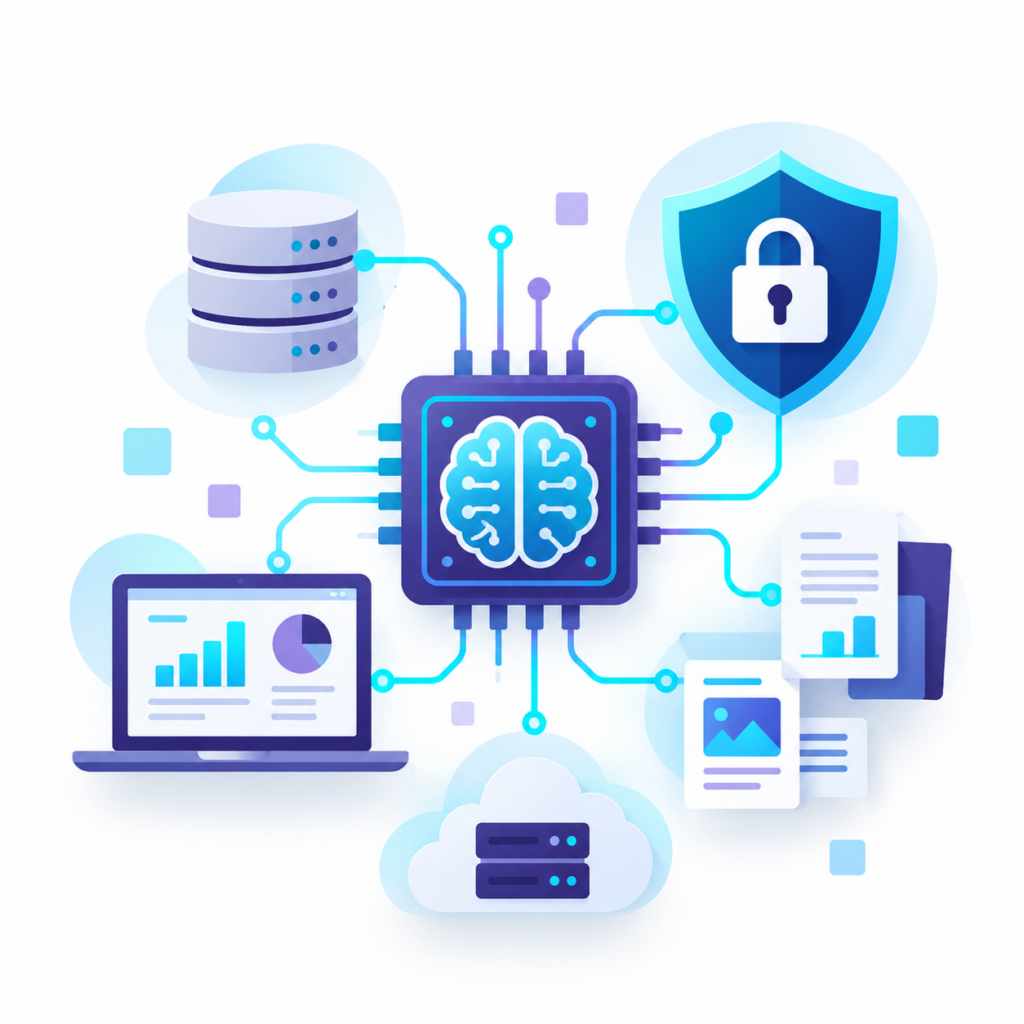
This issue particularly affects organizations that work with large volumes of content. Marketing manages campaigns, brand messages, and strategies that are not yet published. Legal works with contracts and sensitive documentation. Human Resources processes personal information. Product manages its own knowledge. When these assets are incorporated into an AI solution, privacy, confidentiality, and traceability cease to be technical issues and become business conditions.
That's why, when we talk about artificial intelligence for businesses at ATLS, we're not just talking about generating content faster. We also talked about corporate data protection, confidentiality, and control over the information that enters and leaves each AI flow. We're talking about integrating AI into a business environment where the organization can maintain control over its information.
Artificial intelligence for businesses: Security depends on how data is managed
Not all artificial intelligence tools manage information in the same way. A consumer assistant, a business account, and a solution integrated into a corporate workflow can rely on similar technologies and yet operate under very different conditions.
The difference is not only in the model that each platform uses. It is also in the rules that determine how information is processed, what permissions exist, how long the content is kept, whether third parties are involved, and what capacity the company has to retrieve, review, or delete its data.
For ATLS, this distinction is essential. A company should not assume that a tool is suitable for corporate information simply because it is presented as private or business information. Before working with real content, it is advisable to understand the purpose of the processing, the possible use for training, the retention conditions, the access, the location of the processing, and the contractual guarantees.
Context also modifies risk. Adapting content that is already published is not the same as processing a confidential contract, a launch strategy, or internal information. Security should be assessed taking into account the tool, the configuration, the type of data, and the intended use of the result.
Data protection and artificial intelligence: the ATLS approach
When an organization evaluates artificial intelligence for businesses, the company's data protection needs more than a generic security statement. You need to understand what happens to your content throughout the entire process and what controls you can exercise over it.
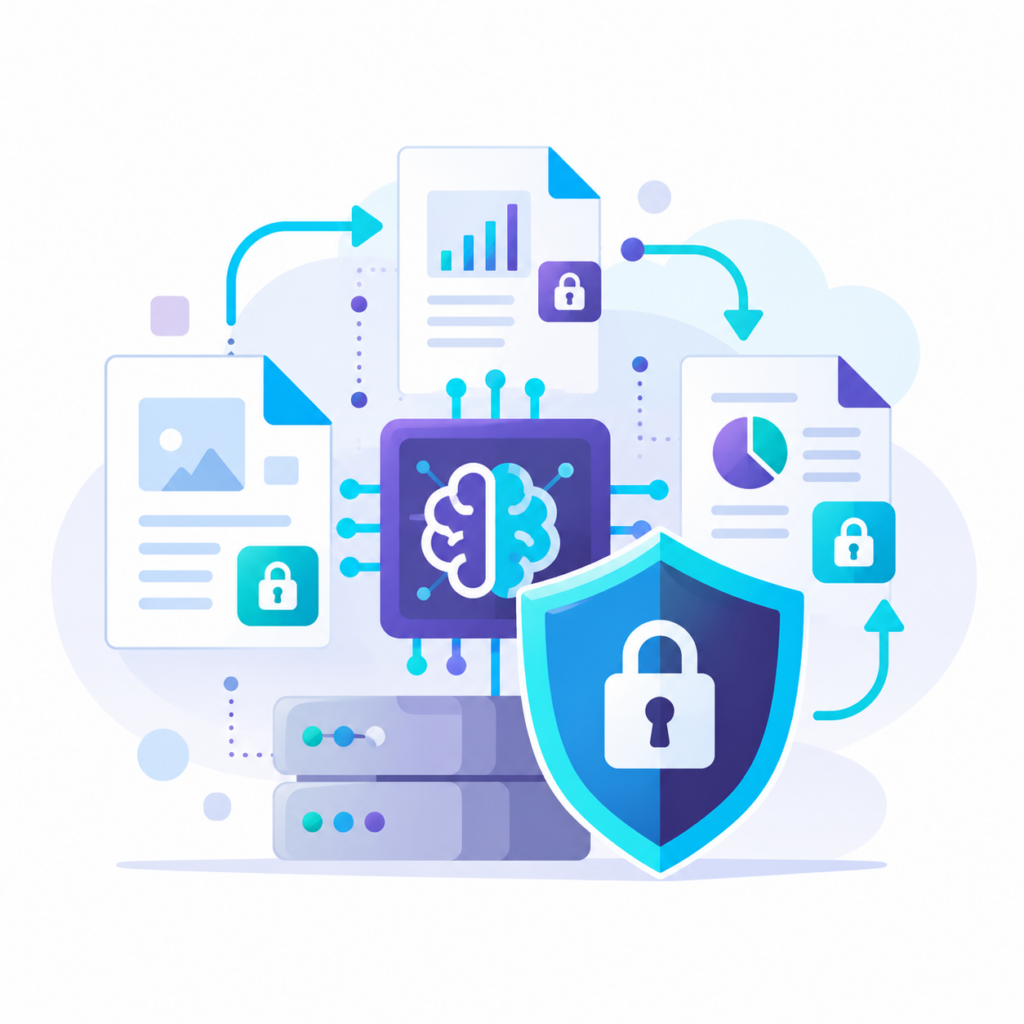
At ATLS we understand security as a combination of technical controls, operational rules and decisions about the content lifecycle. It is not about stating in the abstract that an AI is safe, but about being able to explain how the information is handled and what control capacity the organization retains.
In the case of MINEOur artificial intelligence solution applied to content adaptation and SEO internationalATLS establishes commitments that are especially relevant for teams working with brand assets and sensitive materials. Customer data is not used to train external AI models, there is history and version control, access and permissions can be customized by company, and retention and deletion policies are configurable.
These elements are important because information protection does not depend on a single measure. True security emerges when data processing, access, storage, and traceability are all part of the same work environment.
Your content is not used to train external models
When a company delivers a campaign, a glossary, a style guide, or a content strategy, that material contains context, knowledge, and its own value. At ATLS we believe that this content should not automatically become a resource to improve someone else's model.
Access and permissions tailored to each company
Confidentiality does not depend solely on the technology that generates a response. It also depends on who can view, upload, edit, or retrieve the content. That's why access management is part of ATLS's security approach.
Configurable retention and disposal
Security doesn't end when AI returns a result. Input files, generated versions, and revised content may still contain confidential information. Therefore, a company needs to know how long they will be kept and when they can be deleted.
Content history, versions, and traceability
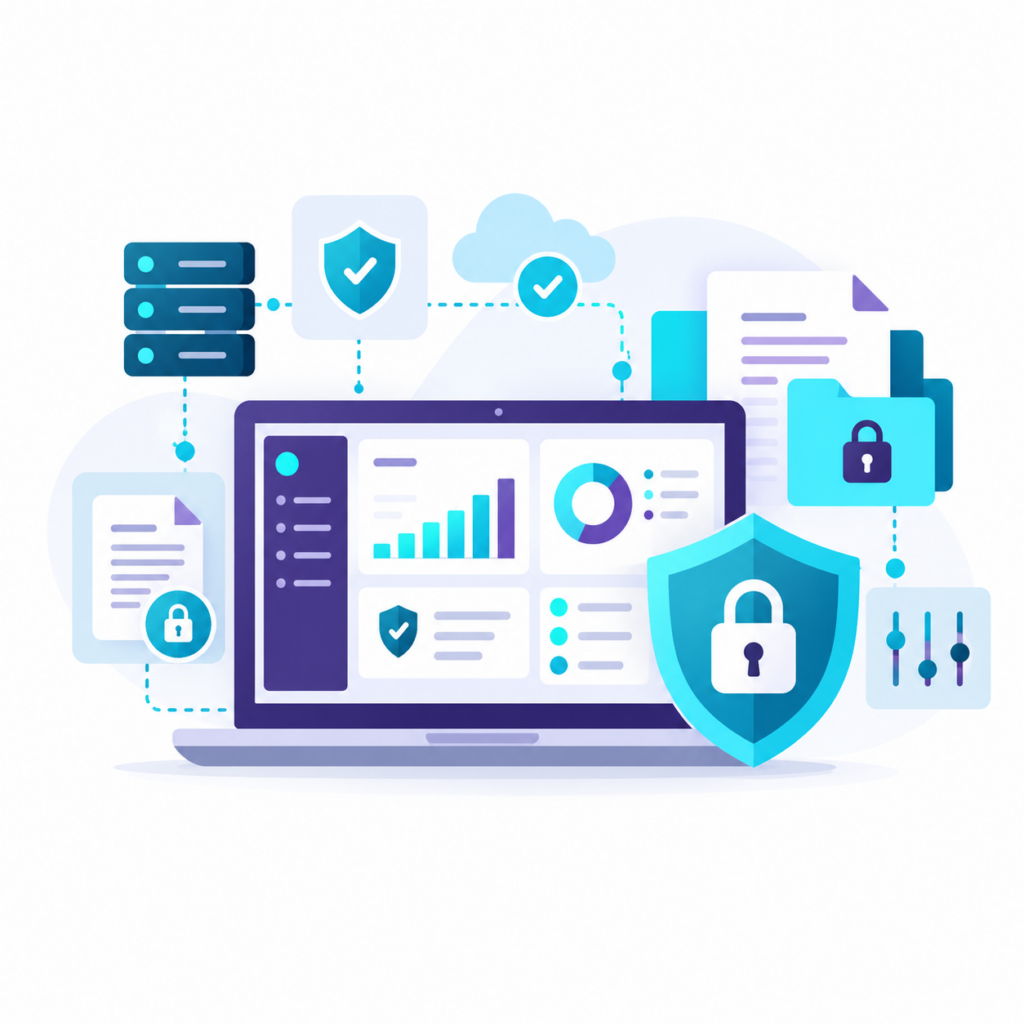
In a corporate environment, it is not enough to say that artificial intelligence has generated a text. When several markets, reviewers or managers are involved, it is important to be able to identify what content was worked on, what result was obtained and which version was finally taken as a reference.
MIA It incorporates history and version control in each generation. This traceability helps to reconstruct the evolution of the content, compare iterations, and maintain a more organized editorial process. It does not replace a technical audit log, but it does provide a layer of control that is especially useful in multilingual content flows and international expansion projects.
Safety at ATLS is integrated from the design stage.
Security should not be added after a solution has been deployed. The beginning Secure by Design It proposes precisely the opposite: integrate protection from conception and throughout the product life cycle.
This approach is especially relevant when we talk about artificial intelligence for businesses and corporate data protection in corporate environments. Subsequent controls hardly compensate for an architecture that has not defined from the beginning how permissions, information preservation, or access to content are managed.
For ATLS, an enterprise implementation must be able to answer specific questions. The initial configuration should adequately limit access, the default options should reduce unnecessary exposure, and the mechanisms for deletion, preservation, and version control should be part of the workflow itself. Trust cannot depend solely on a commercial promise; It needs to rely on understandable and documented controls.
Secure AI doesn't just mean cybersecurity
When discussing security in artificial intelligence, it's common to first think about encryption, servers, or attack prevention. These are important aspects, but from a business point of view the issue is broader.
At ATLS we understand that an AI solution must jointly consider confidentiality, privacy, control and traceability. Confidentiality prevents contents from being exposed to unauthorized persons or organizations. Privacy requires that personal data be processed for defined purposes and within defined limits. The control allows the company to know who accesses, what is processed, and for how long it is kept. Traceability makes it possible to track the evolution of the content and its different versions.
These dimensions are not interchangeable. A system can encrypt information and still retain it for longer than necessary. It may prevent the use of data for training and maintain overly broad permissions. It can also manage access well but not offer a useful history. Therefore, a company must analyze the entire environment and not just a single security feature.
Data protection, GDPR and artificial intelligence in business
The incorporation of artificial intelligence into business processes does not eliminate existing obligations regarding data protection. When processing personal data, organizations must continue to analyze the purpose of the processing, the need to use that information, the applicable legal basis and the risk associated with each case, also following the evolution of European criteria on data protection and artificial intelligence.
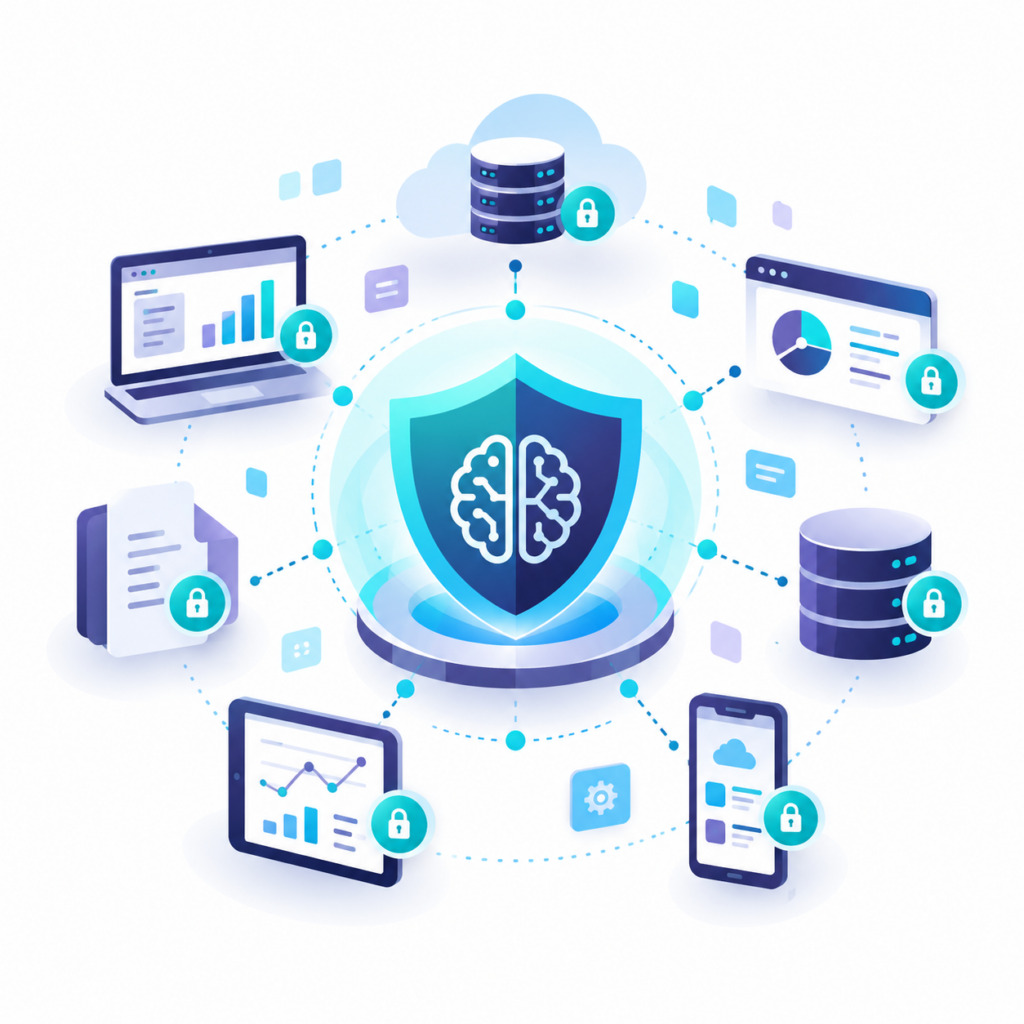
He European Regulation on Artificial Intelligence It also adds new obligations depending on the type of system and its use. This reinforces an important idea for ATLS: Security and compliance are related, but they are not exactly the same thing. Compliance requires documenting decisions, maintaining oversight, and understanding what tools are used and for what purpose.
Therefore, a corporate data protection strategy applied to AI must go beyond simply choosing a platform. The organization needs to define what content can be processed, in what environments, with what permissions, and under what review criteria.
The real risk is using AI without a corporate policy.
The problem is not that Marketing uses artificial intelligence to accelerate a campaign or that Legal uses it to prepare an initial review. The risk arises when each person uses different tools, accounts, and rules, and the organization loses track of what information is being shared or which providers are involved.
This use of artificial intelligence outside of approved channels is often referred to as shadow AI. This can occur when a team enters a still-confidential launch plan into a personal tool, when Human Resources processes sensitive documentation, or when Product shares internal specifications without the company having previously evaluated the platform.
Banning artificial intelligence across the board does not always solve the problem. It can shift usage to even less visible environments. From ATLS' perspective, the alternative is to offer authorized solutions and clearly define what information can be processed, with what tools, with what review, and who should be consulted when there is a doubt.
An effective corporate policy must distinguish between public, internal, confidential, personal and especially sensitive information. Technology must be accompanied by processes and training. Artificial intelligence can speed up work, but information governance remains the responsibility of the organization.
What should a company demand from an artificial intelligence provider?
Before incorporating an enterprise AI solution into a corporate workflow, an organization should be able to get clear answers about the use of its data. You need to know if the files, inputs, or results can be used to train your own or external models; where they are processed and stored; how long they are preserved; who can access them; how disposal is managed; what history and versions remain available; and which providers or subprocessors participate in the service.
It is also important to know about measures related to encryption, customer segregation, backups, recovery, and incident management. In the case of ATLS, the published warranties of MINE They expressly respond to the use for external training, access by company, version control and the configuration of retention and deletion. The remaining aspects must be specified in the technical and contractual documentation corresponding to each implementation.
If a provider cannot accurately explain what happens to a company's information, the problem is not solely with artificial intelligence. It is at the level of control that the organization can exert over it.
ATLS: Artificial intelligence for businesses with speed, quality and control
Security should not turn AI adoption into a static process. Its function is to enable companies to move forward with clear criteria and use technology sustainably.
In international content projects, value emerges when speed, scalability, linguistic quality, and control work together. ATLS combines linguistic technology, brand assets, and professional oversight to manage large volumes of content. Glossaries, style guides, and human review connect automation to the context of each company, while access, versioning, and retention policies help maintain control of the corporate environment.
The conversation then shifts from whether a company should use artificial intelligence or not. The question then becomes what AI to use, for what content, with what data, and under what conditions. That's the difference between testing a tool and building a business capability ready to grow.
Trust will be a competitive advantage in AI adoption
The European framework is moving towards artificial intelligence based on risk, transparency and accountability. This evolution reinforces a clear trend: Organizations need to better understand, explain, and govern how they use AI.
Trust does not come from stating that a platform is secure. It is built with understandable conditions, configurable controls, defined responsibilities, and evidence that can be reviewed. It also requires differentiating between guarantees that are already documented and those issues that must be specified before deploying a solution.
At ATLS we believe that companies don't need to use less enterprise AI or hold back its adoption for fear of losing control. They need to use it more carefully. When AI works with an organization's knowledge, content, and data, security ceases to be an invisible function and becomes the foundation that enables automation, scalability, and innovation without losing trust.
Do you want to use artificial intelligence without losing control of your content?
At ATLS, we combine enterprise artificial intelligence, linguistic technology, and business environments to help organizations scale their content while maintaining control over information and strengthening enterprise data protection in every project. If your company wants to incorporate AI into its content processes, we can analyze which solution fits best, what guarantees are available, and how to securely integrate it into your workflow.
Frequently asked questions about artificial intelligence for businesses and data protection
How does ATLS protect data when using artificial intelligence for business?
At ATLS, security is integrated into the workflow itself. In solutions like MINECustomer data is not used to train external artificial intelligence models, access and permissions can be customized by company, and retention and deletion policies are configurable. The goal is for artificial intelligence for businesses to bring speed and scalability without the organization losing control over its content.
What is the relationship between business data protection and artificial intelligence?
Data protection becomes especially relevant when artificial intelligence processes internal documentation, unpublished content, personal data, or brand assets. At ATLS, the approach involves combining technical controls, operational rules, and traceability so that the company can know what is being processed, who can access it, and for how long the information is kept.
Why is it important to control access and permissions in an enterprise AI solution?
Because confidentiality does not depend solely on the AI model. It also depends on who can view, upload, edit, or retrieve the information. In ATLS, access and permissions can be organized by company to reduce unnecessary exposure and maintain greater control over content.
How can a company use artificial intelligence without losing control of its data?
The key is to use artificial intelligence for businesses within an environment with clear rules on access, preservation, deletion, traceability, and review. ATLS combines linguistic technology, artificial intelligence, and professional supervision to make automation part of a controlled business process aligned with the needs of each organization.