















 Reading time 6 minutes
You have the shop set up. The design is cool. The products are good. And yet, sales aren't taking off outside your local market.
The problem isn't your store. It's that it doesn't speak your customers' language.
And we don't just mean the literal language. We mean really speaking their language: their expressions, their customs, their ways of searching on Google, their preferred payment methods, the tone they expect when reading a product description.
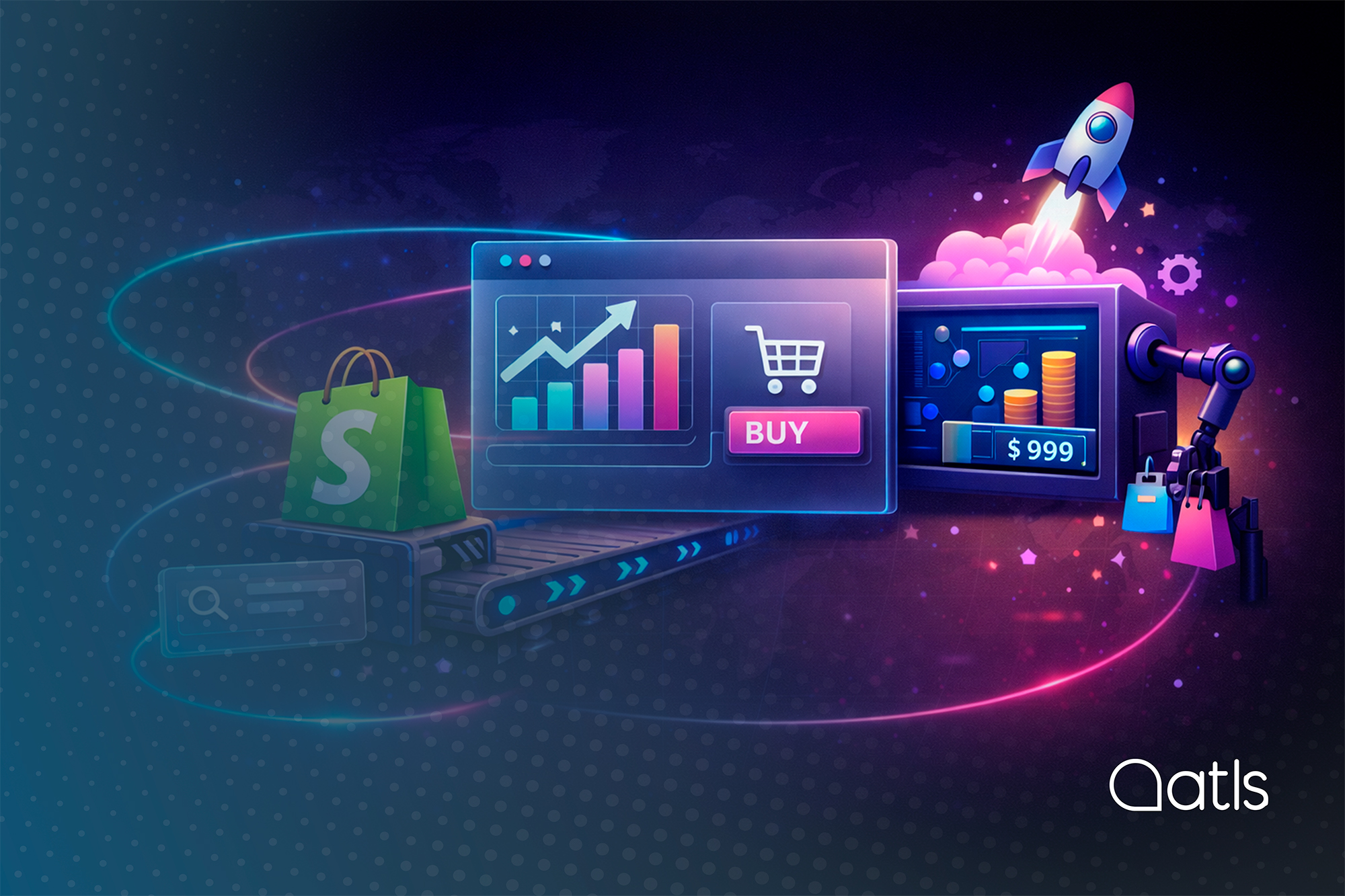
Shopify is not just a platform for setting up an online store. It is a complete infrastructure for scaling a business. The problem is that most companies only utilise 30% of its potential. And that, in a competitive environment like the world of e-commerce today, translates into money that sits on the table.
The difference is not in the tool itself. It's in how you use it.
A Shopify store doesn't make sales on its own (and why this is important to know)
It's easy to fall into the trap. You set up the store, upload your products, choose an attractive template, and wait for the sales to roll in.
But they don't. Or they do come, but not at the expected level. The reason is simple: Shopify is a tool, not a strategy.
Traffic doesn't just appear by itself. Conversions do not take place automatically. Customer loyalty is not the default.
For the system to work, you need to align three pillars:
- Attracting qualified traffic
- Conversion optimisation
- Seamless user experience
If one fails, the entire system suffers.
The mistakes holding your store back right now
Stores that never quite take off often follow the same patterns. And it's nothing to do with the product.
Weak product descriptions. Generic descriptions with no focus on the benefits, and without addressing objections. The user opts not to buy because they do not have enough information or confidence.
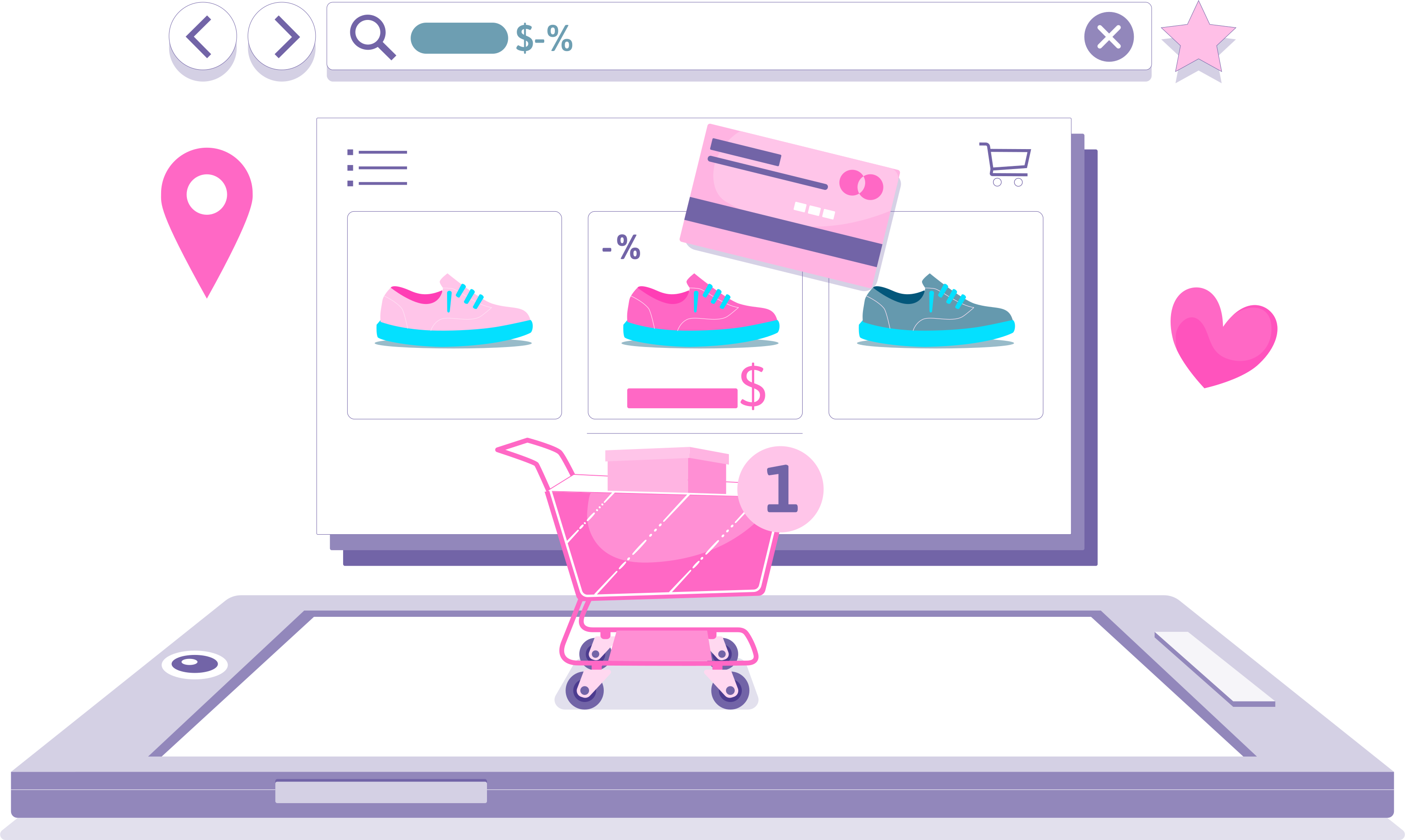
Problematic checkout process. Hidden costs, limited payment methods, unclear text. Every small obstacle reduces conversion rates.
Poorly ranking content. Without organic visibility, you are completely dependent on advertising. And that makes growth more expensive.
Lack of localisation. And here is the most critical point. Incorrect currency, poorly adapted language, terms that don't fit culturally. The user doesn't feel comfortable. They don't make a purchase.
A concrete example: If you sell sportswear and your listing says "zapatillas de running" in Spanish, writing "running shoes" in English is not enough. In the UK they'd say "trainers". In the United States, "sneakers". These are different terms with different search volumes, and a buyer who doesn't recognise the term they would typically use simply doesn't convert.
That, multiplied by all your products, categories, descriptions, automated emails, and return policies, is the difference between a store that sells and one that simply exists.
How to turn Shopify into a system that actually sells
When you stop seeing Shopify as a tool and start treating it as a platform for growth, you begin to make different decisions. And the results come.

1. Product pages that sell, not just inform
A product page is not a description. It's a sales pitch.
You need to answer three key questions: What is it? Why do I need it? Why buy it here and not somewhere else?
This means working on clear benefits, social proof, images that sell, and conversion-oriented text. The impact is immediate: more time on the page and more sales.
2. Seamless user experience
Every click counts. Every second spent loading matters. Every unanswered question is a lost sale.
On Shopify, this translates into the need for clear navigation, a simplified purchase process, and information visible before reaching checkout. The key lies in eliminating everything that generates doubt.
3. SEO ranking by market
If your store doesn't appear on Google, it doesn't exist. And relying solely on advertising is not a sustainable strategy.
This is where the content comes in: optimised categories, listings with real search intent, targeted keywords by market. Not the ones that result from translating your keywords from the local market, but the ones that buyers in the respective countries actually use.
4. Well-executed localisation, not simple translation
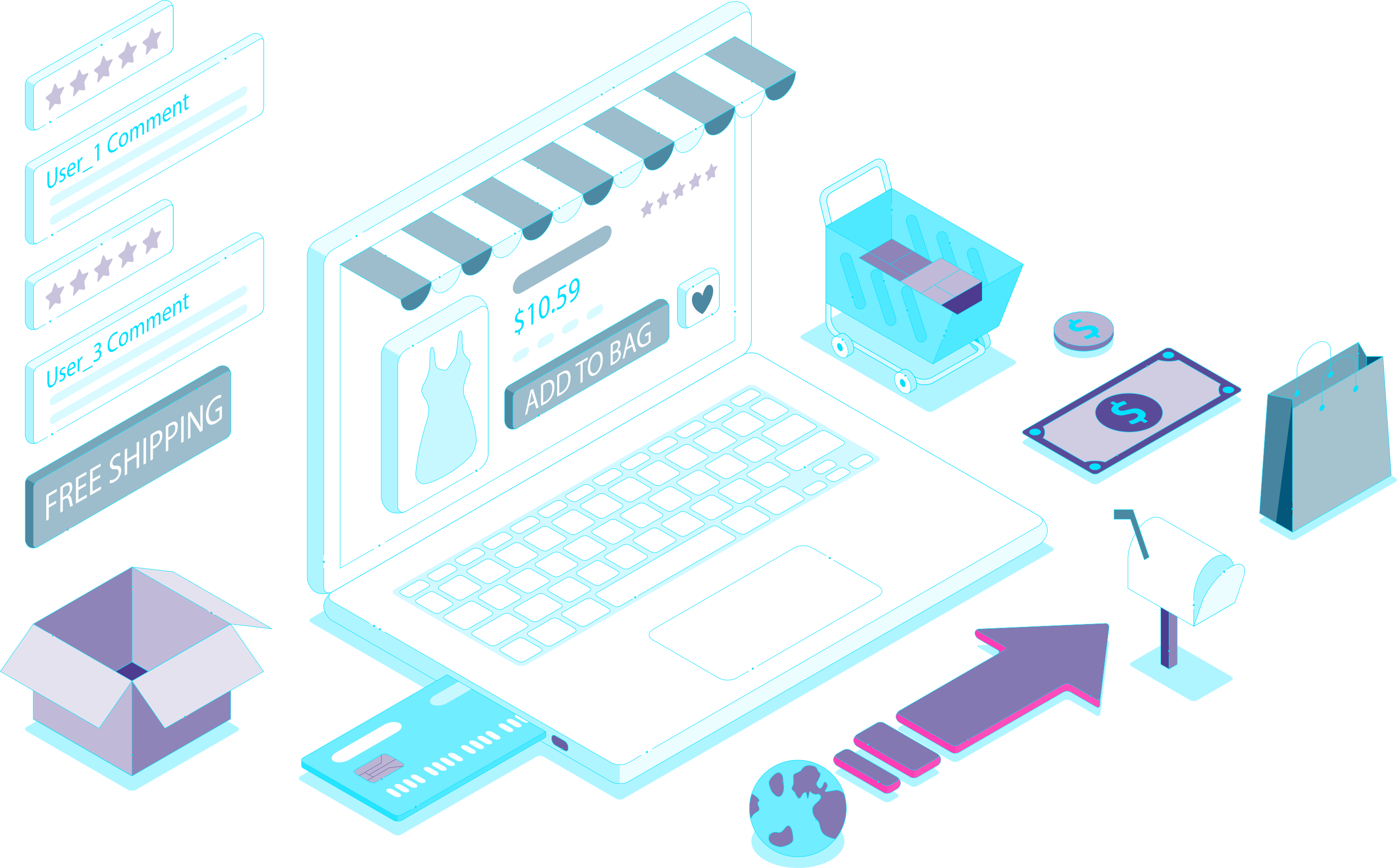
Selling abroad is not about translating. It's about adapting.
A well-localised Shopify store has culturally adapted content, local payment methods, consistent messaging across markets, and an experience that feels like a native site. More trust, more conversion.
What nobody sees but that the buyer notices also needs to be adapted: date formats, currencies, units of measurement, return policies according to local regulations, checkout texts. These are details that go uncelebrated when things are going well, but that make buyers flee in their droves when they're done badly.
5. Automation to scale without losing control
Real growth cannot depend on manual processes. Shopify allows you to automate transactional emails, cart recovery, marketing flows, and order management. This means you can grow without multiplying costs or the effort involved.
The difference between two stores with the same product
Two stores. Same product. Same price. Completely different results.
Why? Because one understands how to use Shopify in order to make sales. And the other one only uses it to have an online presence.
Shopify is not the limit, it's the starting point.
If you're already on Shopify, you have the advantage. You don't need to switch platforms or start from scratch. You just need to optimise what you already have, adapt it to each market, and work on the strategy that makes everything fit together.
More traffic. More conversions. More sales.
Your store already has what it needs to sell more
The product is available. The platform is functioning. The market is there.
What's missing is for your store to speak the language of the person holding the credit card.
At ATLS Global, we have been helping brands successfully expand into new markets for over 20 years. If your Shopify store is ready to take the leap, we provide the strategy, process, and team to make it happen.
FAQs about Shopify
What is Shopify and what is it used for?
Shopify is an e-commerce platform that allows you to create, manage, and scale online stores in a flexible and professional manner.
Is Shopify suitable for selling in multiple countries?
Yes, provided the store is correctly localised and adapted to each market, both in terms of the content and the user experience.
What's the difference between translating and localising on Shopify?
Translating is changing the words. Localising is adapting the content, tone, sales pitch, SEO structure and the cultural aspects so that it resonates with buyers in each market.
What do I need to do to sell more with Shopify?
Optimise product listings, eliminate friction at checkout, work on SEO rankings by market and execute a professional localisation process when selling internationally.