








 Reading time 7 minutes
Machine translation and artificial intelligence have completely changed the way we communicate. Today anyone can translate a text in seconds. But precisely for that reason, professional specialised translation is more relevant than ever.
Because when the content is technical, legal, pharmaceutical, or strategic, translating quickly is not the same as translating well. Or even translating safely.
Professional specialised translation does not compete with AI: It surpasses it where AI falls short. In knowledge of the sector, in interpreting context, in making critical linguistic decisions, and in accountability for the final result.
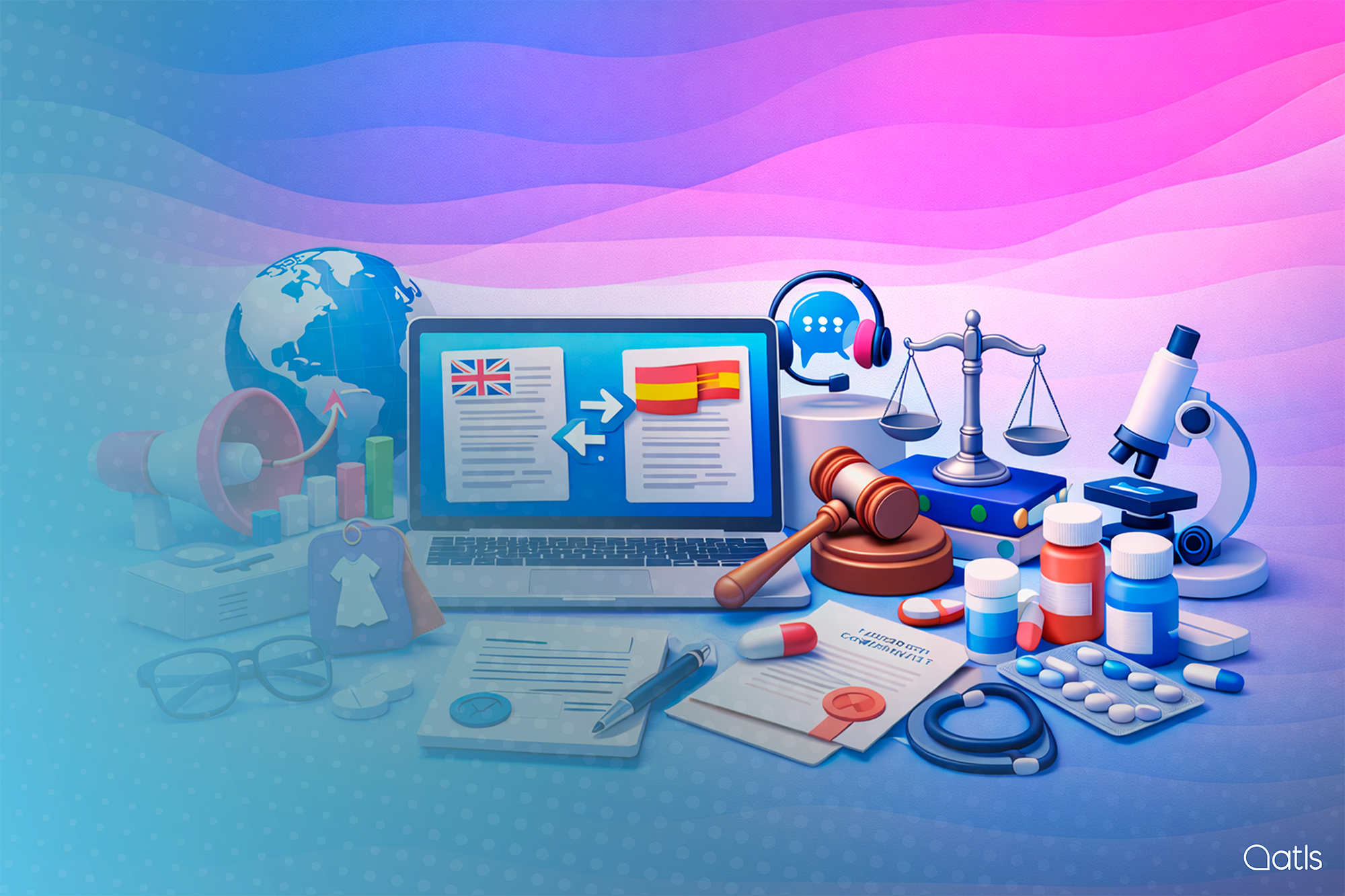
Specialised translation: much more than “translating words”
One of the biggest mistakes today is thinking that translation consists solely of converting a text from one language to another. In reality, professional specialised translation involves transferring expert knowledge with terminological rigour, conceptual coherence and cultural appropriateness.
AI can offer a quick foundation, but it doesn't understand the legal scope of a clause, the health risk of a poorly formulated leaflet, or the commercial impact of a poorly localised message. That's where specialisation comes into play.
The difference between a standard professional translation and a specialised translation lies in the depth.
Mastering the language or associated tools is not enough: you need to understand the subject matter, the context, the audience, and the consequences of each word.
That's why specialised translators are not just linguists. They are professionals with sector-specific training and real-world experience, constantly staying up-to-date with regulations, technologies, and uses specific to each industry.
When AI is not suitable for translation
Artificial intelligence has brought about a huge advance in productivity. In internal environments, drafts, or low-risk content, it can be a great ally. But when it comes to critical documents, relying solely on AI is taking an unnecessary risk.
Machine translation:
- Does not guarantee terminological accuracy in regulated and specific sectors.
- Assumes no legal or reputational responsibility.
- Does not detect ambiguities, multiple possible interpretations, or contextual errors.
- Does not truly adapt to specific cultural and legal frameworks.

Professional specialised translation, however, does. And it does so because it relies on human judgement, expert review and quality control.
Specialised translation by sector: where AI cannot fail
Specialised marketing translation: creativity and cultural adaptation
AI can translate a slogan, but it doesn't know if it will have an impact. Specialised marketing translation goes far beyond the literal: it adapts messages, emotions, and cultural references to connect with each market.
A successful international campaign does not depend solely on the literal translation of a slogan or message.
Specialised marketing translation involves adapting ideas, metaphors, wordplay, and cultural elements that resonate with the target audience.
This is where localisation and transcreation come into play, processes where human judgement is irreplaceable. A bad translation can not only fail, but also damage the brand's image.
Let's take, for example, the launch of a new drink across different countries. Beyond the label, advertisements, promotional materials and even cultural references need to be adapted.
A translator specialising in marketing knows how to maintain that creative spark, avoid misunderstandings, and enhance commercial impact.
Legal translation: when every word has consequences
In the field of legal translation, AI can be especially dangerous if used without supervision. Contracts, statutes or rulings do not allow for ambiguous interpretations.
Professional legal translation requires knowledge of the legal system, precise terminology, and constantly staying up to date. And when official validity is required, only a sworn translator can provide it.
Pharmaceutical translation: safety, accuracy and social responsibility
In the pharmaceutical sector, specialised translation takes on a critical dimension. From directions for use to clinical trial reports, technical documentation, packaging and labels, accuracy is vital for patient safety.
A poor translation here can endanger lives, trigger health alerts, and result in serious regulatory penalties.
Therefore, pharmaceutical translators must master both the technical language and the regulations applicable in each country. On top of that, confidentiality and ethical handling of information are non-negotiable requirements.
Fashion translation: more than words, trends and styles
Fashion is style, identity, and aspiration. Translating fashion is not about describing clothes, it's about conveying concepts. Specialised translation in this sector requires cultural sensitivity, creativity, and mastery of a brand's language.
From catalogues and campaigns to labels and sizes, specialised fashion translation requires creativity, mastery of terminology and a strong focus on localisation.
Furthermore, the rise of transcreation (creative adaptation of advertising texts) demonstrates the importance of relying on professionals who understand both the sector and the brand language.
What makes a professional specialised translator today?
Specialised translation requires a well-defined professional profile. Not every translator can handle the complexity of technical, legal, or creative texts. In the age of AI, a specialised translator provides what no machine can offer on its own:
- Solid judgement and decision-making
- A deep understanding of the sector
- Accountability for the final result
- Thorough review and quality control
- Smart use of technology to support, not to substitute
The difference lies not in translating faster, but in translating better and with all the guarantees.
Our advice: combine technology and specialisation, but prioritise human judgement
AI is here to stay, and when used properly it can be a great ally. But in specialised translation, real value still lies in people.
Therefore, our recommendation is clear: Choose a specialised translation agency that knows how to integrate advanced technology with human experience, sector knowledge, and professional commitment.
The result is solid, secure and effective communication, capable of supporting internationalisation, innovation and growth processes without incurring unnecessary risks.
How to choose a specialised translation agency in the age of AI
Not all agencies work in the same way. When making your choice, consider the following:
- Real-world experience in specialised sectors
- Quality certifications such as ISO 17100
- Clear human review processes
- Responsible and transparent use of technology
- Tailored customer service and strategic approach
At ATLS Global, we understand specialised translation as a balanced combination of knowledge, technology, and human judgement, offering reliable solutions even in the most demanding environments.
Conclusion: Professional specialised translation remains irreplaceable
Professional specialised translation has not become less valuable with the arrival of AI. Quite the reverse: It has become more necessary than ever.
In a context where machine translation can seem like enough, the real difference lies in professional specialisation. If your texts have a legal, technical, health, or commercial impact, don't take a chance on a generic solution.
At ATLS Global, we combine advanced technology and specialised translators to ensure accuracy, security, and real results in every market. Talk to our team and turn translation into a competitive advantage, not a risk.
Frequently asked questions about specialised translation
What is specialised translation?
Specialised translation is the adaptation of technical or sector-specific texts that require in-depth knowledge and specific terminology.
What types of specialised translation are there?
Marketing, law, pharmaceuticals, fashion and many other sectors with a high degree of technicality have specialised translations.
What should a specialised translator offer?
They must be an expert in the field, use advanced technology, guarantee confidentiality, and deliver reviewed and accurate results.
Why work with an agency that offers specialised translation?
Because it guarantees accuracy, confidentiality, and cultural adaptation, avoiding errors and legal issues in critical documents.